
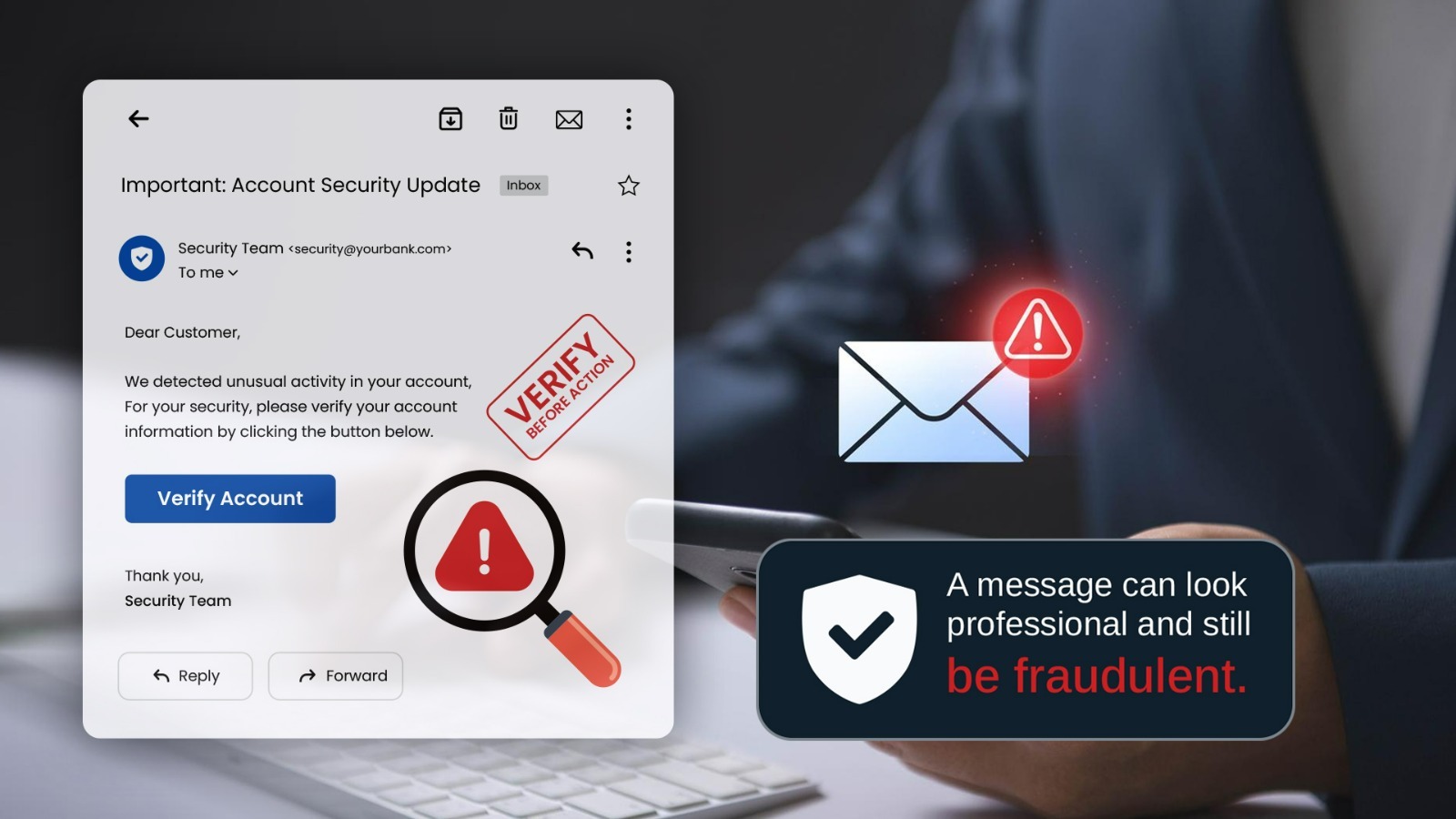
Artificial intelligence has changed the quality of scam communication. A scammer no longer needs strong writing skills to create a convincing message. AI tools can produce professional language, clean grammar, believable explanations, and a tone that matches the situation. A message can sound like a bank, a delivery company, a vendor, a government office, or a supervisor.
That removes one of the filters people used to trust most: the feeling that something was “off” because the writing looked bad. Modern scam messages can be calm, clear, and well-structured. They can use normal business language. They can also be adjusted to sound urgent without looking extreme.
This is especially dangerous because most people do not investigate every message deeply. They skim. They see a familiar logo, a normal subject line, and a message that appears relevant. Then they decide whether to click, reply, download, or pay. Scammers do not need to win a careful investigation. They only need to survive a quick glance.
AI also makes targeted messages easier. A generic scam is easier to ignore. A message that references a common vendor category, a familiar service, or a routine business process is harder to dismiss. For employees, this can show up as a password reset, document share, invoice reminder, or account alert. For families, it may look like a bank warning, delivery issue, or support message.
The old idea that fake messages are always sloppy is outdated. A message can look professional and still be fraudulent. A website can look official and still be fake. A payment request can include a real company name and still be part of a scam.
The better habit is to separate appearance from verification. Do not ask only whether the message looks real. Ask whether the request can be verified through a trusted channel. That is the new defense.




.avif)
.avif)