
This pressure is intentional. When a person believes there may be financial, legal, or operational consequences, they are more likely to react quickly. Cybercriminals understand this. Rather than relying solely on technical attacks, many modern scams are built around psychology, timing, and trust.
That pressure is the point. A message may warn about a missed payment, tax issue, account restriction, legal notice, security problem, or urgent invoice. The person receiving it is pushed toward quick action. When people believe there may be a deadline or consequence, they are less likely to slow down and verify.
Government impersonation scams often use official language, logos, and references to real processes. The message may mention tax accounts, Social Security, regulatory notices, benefits, or penalties. The goal is to make the request feel serious enough that the person responds immediately.
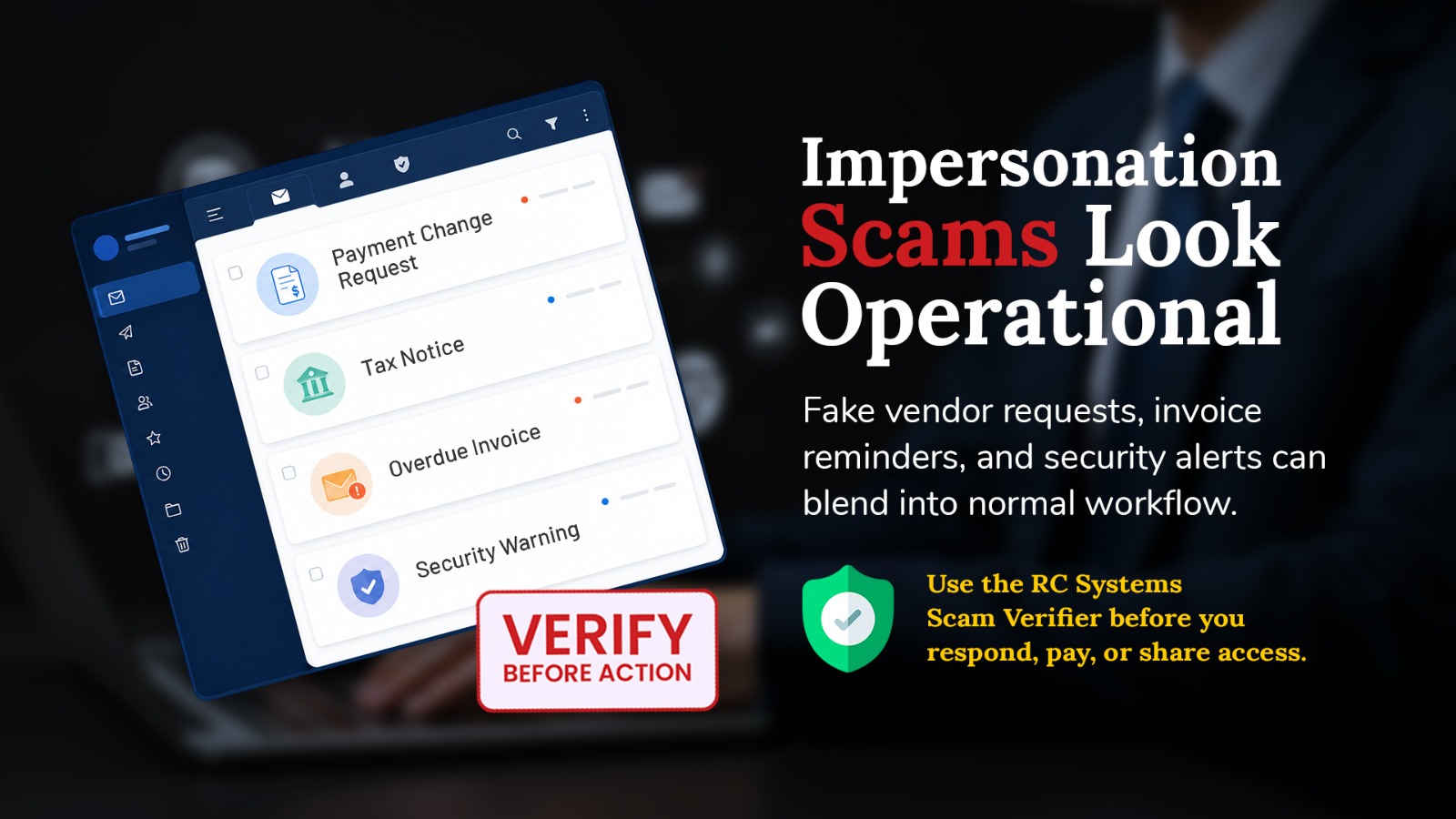
Vendor impersonation can be just as damaging, especially for businesses. A fraudulent message may appear to come from a known supplier or service provider. It may request a payment update, new banking details, overdue invoice payment, or document review. If the message lands at the right moment, it can blend into normal business operations.
The danger is that these scams do not always look dramatic. They often look routine. That is why they are effective. A fake invoice during a busy week may not feel like a scam. A payment-change request from what appears to be a known vendor may seem ordinary. A security warning from a familiar software provider may feel reasonable.
The safest response is to build verification into the process. Government agencies and legitimate vendors have established ways to communicate. If a message asks for money, account access, payment changes, or sensitive information, it should be checked through a trusted method already on file. Do not use the phone number, link, or contact details inside the suspicious message.
For businesses, this should not depend on one employee’s instinct. Payment changes, wire instructions, account access, and sensitive documents should require verification as part of normal procedure. That makes the business less dependent on whether someone notices a subtle warning sign.
Impersonation scams succeed when pressure replaces process. The best defense is to slow the moment down and confirm the request outside the message.




.avif)
.avif)