

I’ll never forget the first time I saw a credit report. I was in my early 20’s and was purchasing my first home. An 800 number was called, information was provided to an agent, and about 10 days later I received this huge packet in the mail listing the handful of credit cards I recklessly opened in college and a bunch of other details that there were pages of fine print to attempt an understanding. I ended up learning the hard way.
What stayed with me the most all these years is the importance of treating your credit ratings like a tree – nurture and tend to your credit report to watch it blossom. High credit scores open tons of opportunities for you that may have never been considered.
My family choose Credit Monitoring through RC Systems and Support because of the simple dashboard with real-time access to all three major credit bureaus. The beauty for me on the personal Full Credit Report view is the side-by-side analysis from Experian, TransUnion, and Experian, all in one place. This remainder of this article walks you through how to understand your full credit report view and how to use it confidently.
Your credit score is a numerical snapshot of how lenders assess your likelihood of repaying borrowed money. It’s not a judgment of character—it’s a risk assessment based on your credit history.
RC Systems and Support uses the VantageScore® 3.0 credit scoring model developed collaboratively by Experian, TransUnion, and Equifax. This was confusing because I only knew about a FICO Score. The easy way I was able to understand this is – FICO is a private company selling their ranking numbers to the credit bureaus – VantageScore is a system developed by the bureaus. Scores typically range from 300 to 850, with higher scores indicating lower risk to lenders (same concept as FICO)
In simple terms:
While VantageScore 3.0 is widely used, I have learned that not every lender relies on the same scoring model – or uses the same credit bureau for their decisions. That’s why the number may vary between systems—but your overall risk level is often similar.
Each of the three major credit bureaus—Experian, TransUnion, and Equifax—maintains its own version of your credit file. Basically, they each put priority on different elements of your financial behavior. Some of the reasons credit scores my differ are:
This is why I find viewing all three bureaus together is so valuable. It helps you spot discrepancies early and understand your full credit picture—not just a partial view.
When you open the All Three Bureaus View in the RC Systems portal, you’ll see your credit information side by side. Here I’m using a sample account to help you visualize the different readings.

The at-a-glance overview allows you to see your credit score from each bureau. I find this to be most important because if all three scores are basically aligned, no red flags rise. But, if one score is dramatically higher or lower than another, it could indicate fraudulent activity or something being reported incorrectly to a bureau.
One of the things I find interesting are the number of names associated with my credit report. I’m lucky to have never suffered through identity theft, but even so, when lenders report they skip letters in my name or use my middle name instead of my first. This is an area I always keep my eye on in looking for fraudulent activity.
The Personal Information section helps confirm:
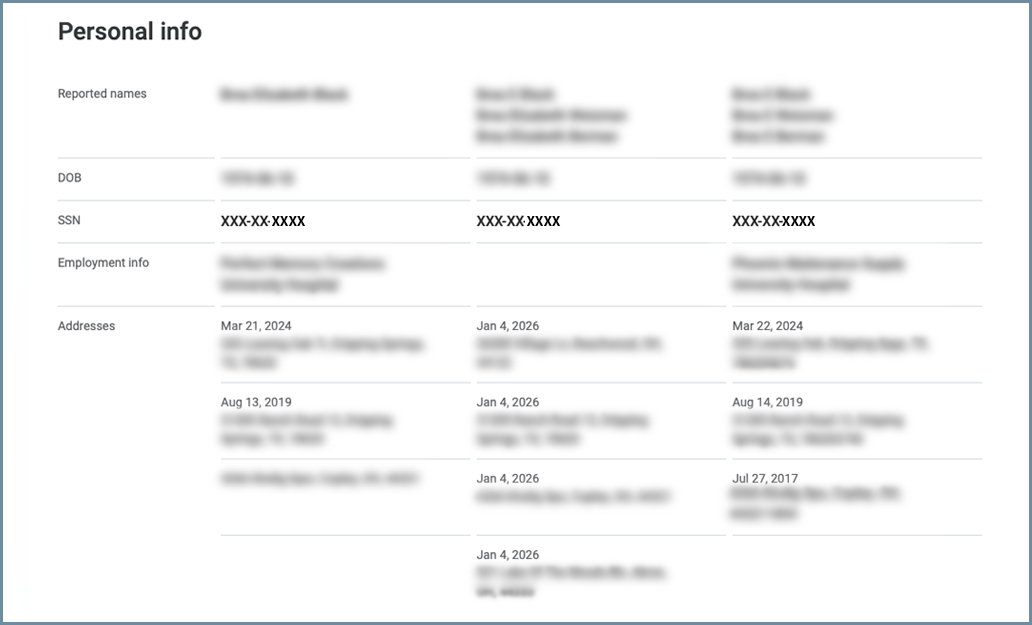
Unexpected entries on your credit report can sometimes signal reporting errors—or potential identity issues. So, this is one of the priorities for me in reviewing my credit report.
I find this to be the most tedious part of reviewing my credit report, but undoubtedly the most important. Over the years I’ve faced dozens of circumstances where I closed a debt account and it remained on my report, or I closed an account voluntarily and the credit report showed it was closed by lender. Both actions can negatively impact your credit report.

For each bureau, the RC Systems & Support combined credit score dashboard shows:
In the section below, I can drill down in detail for information about credit cards, auto loans, real estate loans,
and other installment or revolving debt. On the credit score dashboard, you can see:
The following sections I may scan through a few times per year and only dig deeper in if I’m observing downward trends in my credit scores.
Selecting an individual account reveals deeper insight, including:

RC Systems and Support also provides click-to-call phone numbers for creditors, making it easier to address discrepancies or request corrections directly.
My goal in managing my credit score is to do everything possible to avoid the negative indicators. Negative activity—such as late payments, collections, or public record filings—is displayed clearly, with visual indicators to show how you’re doing overall. My 20s are now long behind me and I get to view these encouragements!

This is section is especially valuable if you’re:
Instead of guessing whether things are improving, you can see it in your credit scores and your “Clean slate!” ratings.
This was something I had absolutely no idea how financial behaviors work behind the scenes to positively or negatively impact our lives. The credit score is so much more than determining if you will qualify for a loan. Many people don’t realize credit information can influence:
Monitoring your credit isn’t just about preparing for a loan—it’s about protecting your financial stability. I know people who have been denied auto insurance or charged astronomical rates for no reason other than a bad credit score.
The goal of credit monitoring isn’t perfection. It’s visibility. And for me, visibility is empowerment. Our credit reports should not be a mystery to us, especially when it comes to addressing abnormalities.
With RC Systems and Solutions, credit monitoring for my family became:
When you understand how to read your credit report, you’re better equipped to protect your identity, correct errors early, and make informed financial decisions—without stress or guesswork.
I recommend you do your research – which will hopefully lead you back to Credit Monitoring from RC Systems and Support. Be sure the solution you pay for meets your needs for timeliness, access, and support when fixes are necessary.
If you have found yourself drowning in debt, we recommend you investigate The National Foundation for Credit Counseling (NFCC) as your first step in repairing your credit.




.avif)
.avif)