
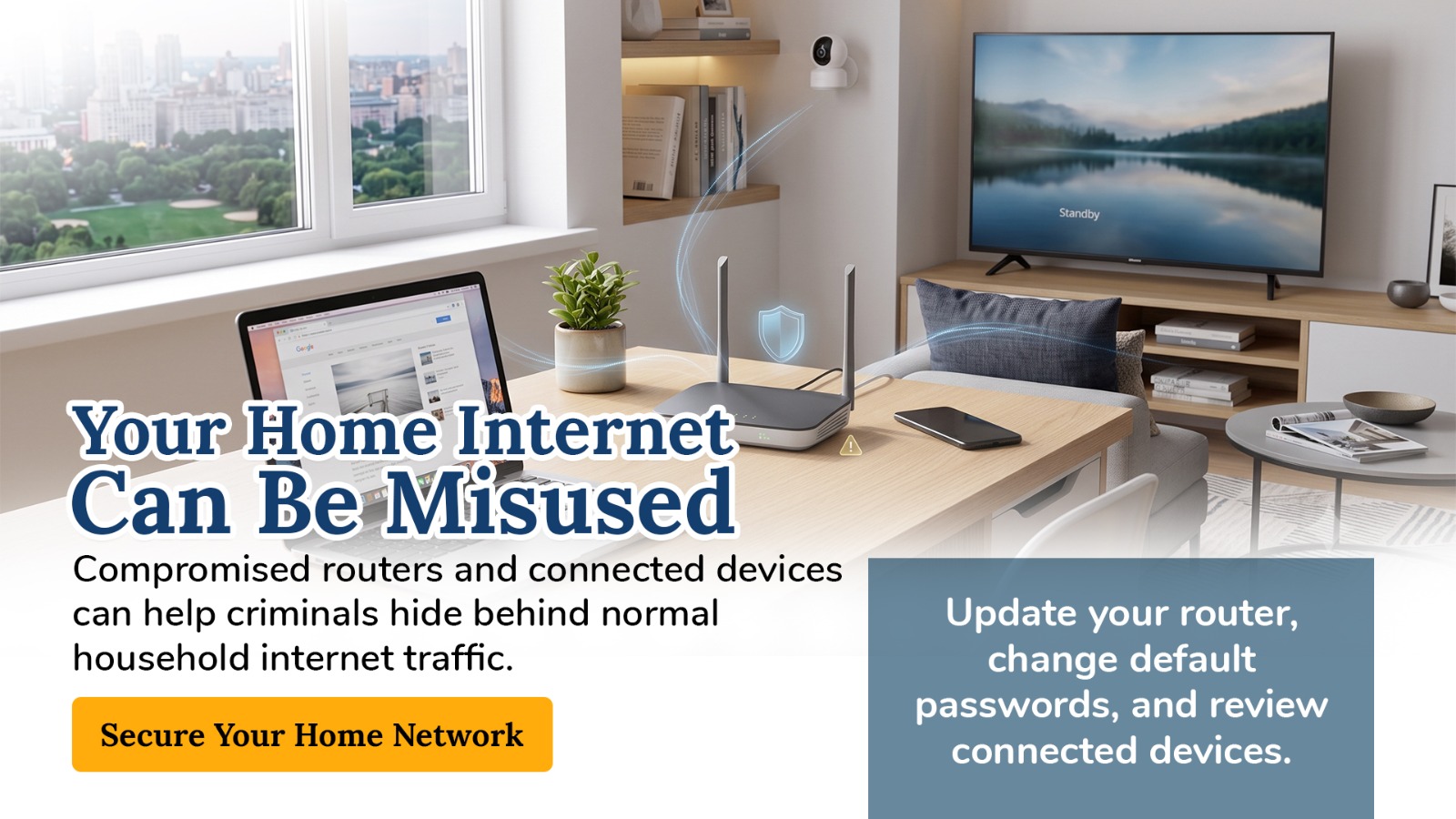
That is exactly why a recent warning from the FBI caught our attention. According to the agency, cybercriminals are increasingly compromising internet connected devices, including home routers, to build what are known as residential proxy networks. These networks allow criminals to disguise their online activity by routing it through the internet connections of unsuspecting people, making malicious traffic appear as though it is coming from an ordinary home instead of a cybercriminal.
Source: FBI Public Service Announcement, Evading Residential Proxy Networks: Protecting Your Devices From Becoming a Tool for Criminals.
At first glance, this may sound like something that only affects large businesses or government organizations. In reality, it is a growing concern for everyday households because the very devices designed to keep us connected can also become targets when they are left unprotected.
Most of us think of our home network as nothing more than the connection that powers our daily lives. It streams movies, keeps our phones online, supports remote work, and connects everything from smart televisions to security cameras. Once everything is working, we rarely think about the router sitting quietly in the corner.
Cybercriminals think about it very differently.
To them, a residential internet connection is a valuable resource. Traffic coming from a real home is often viewed as more trustworthy than traffic originating from anonymous servers or data centers. If criminals can secretly route their activity through residential devices, they have a better chance of avoiding automated security systems designed to detect suspicious behavior.
That means your internet connection can become a tool that helps hide someone else's identity, even if you have no idea it is happening.
The term may sound technical, but the concept is surprisingly simple.
Imagine someone commits a crime while using your home address instead of their own. Anyone looking at the evidence would initially believe the activity was connected to your house because that is the address they can see.
A residential proxy network works in much the same way. Instead of using their own internet connection, cybercriminals route their online traffic through compromised devices belonging to ordinary people. To websites and online services, the activity appears to come from a legitimate household, making it much harder to distinguish malicious traffic from normal internet use.
According to the FBI, these networks are commonly used to conceal criminal activity, bypass fraud detection systems, support phishing campaigns, and carry out credential attacks without revealing the attacker's true location.
The most concerning part is that many victims never realize their devices have become part of the network.
Contrary to what many people believe, cybercriminals usually do not need to guess your WiFi password or break into your network through some dramatic Hollywood style hack.
In many cases, they take advantage of devices that have not been updated for months or even years. Older routers, internet connected cameras, and other smart home devices often contain known security vulnerabilities. Once manufacturers stop providing updates, those weaknesses remain exposed for anyone who knows where to look.
Default usernames and passwords also continue to be a common problem. Although they are meant to be changed during setup, many people leave the factory settings unchanged, making it much easier for attackers to gain access.
This does not mean every smart device is dangerous. It simply highlights the importance of treating every connected device as part of your home's overall cybersecurity.
At first, it seems like an odd target. After all, most people assume cybercriminals are interested in bank accounts, passwords, or personal files. So why would they care about an ordinary home network?
The answer comes down to trust. Security systems have become much better at identifying suspicious internet traffic originating from known malicious servers. Residential internet connections, however, are different. They belong to real households, making them appear far more legitimate. By routing their activity through compromised home networks, cybercriminals can make phishing campaigns, automated attacks, and fraudulent transactions blend in with normal internet traffic.
Think of it like someone borrowing your return address to send suspicious packages. The packages did not come from you, but your address is the one everyone sees. That is exactly what makes residential proxy networks so valuable to criminals and so difficult for security systems to detect.
Unlike ransomware or other forms of malware, residential proxy networks are designed to stay hidden. Their goal is not to lock your files or demand payment. Instead, they quietly use your internet connection while avoiding anything that might attract your attention.
That means many people never realize there is a problem. Their devices continue to work, websites still load, and daily routines remain unchanged. Meanwhile, their network could be helping someone conceal malicious activity somewhere else in the world.
This is one of the reasons the FBI issued its warning. The agency wants people to understand that cybersecurity threats are no longer limited to obvious attacks. Sometimes, the greatest risk is something operating quietly in the background.
In many cases, probably not.
There is rarely a flashing warning or an obvious sign that your router has been compromised. However, there are a few things worth paying attention to. If your internet suddenly becomes slower than usual without explanation, if your router settings change unexpectedly, or if you notice unfamiliar devices connected to your network, those are all reasons to investigate further.
It is important to remember that these symptoms do not automatically mean your network has been compromised. Slow internet can have many causes. The point is to become familiar with your home network so that unusual behavior is easier to recognize.
Cybersecurity is often about noticing small changes before they become much larger problems.
The encouraging news is that protecting your home network does not require expensive equipment or advanced technical knowledge. Most of the steps recommended by the FBI are simple and take only a few minutes.
Start by checking whether your router is still receiving security updates from the manufacturer. If the device has reached the end of its support life, replacing it is often the safest choice. A router that no longer receives updates will continue to accumulate security vulnerabilities over time.
It is equally important to change default administrator credentials, install firmware updates whenever they become available, and review the devices connected to your network every so often. If you no longer recognize a device or no longer use it, remove it from your network until you can confirm what it is.
Many homeowners spend hundreds of dollars protecting their computers while overlooking the single device that connects everything else. Your router deserves the same level of attention as the laptop sitting on your desk.
One of the biggest misconceptions about cybersecurity is that only large companies or government agencies are targeted. The reality is very different. Cybercriminals often look for the easiest opportunities, and home networks frequently provide exactly that when security updates are ignored or devices are left with their default settings.
The FBI's warning is not intended to alarm homeowners. Instead, it is a reminder that the internet has changed. Our homes are filled with connected devices that make life more convenient, but every new connection also creates another responsibility. The more we understand how these technologies work, the better prepared we are to protect them.
At RC Systems & Support, we believe good cybersecurity is built on awareness, not fear. Understanding today's threats is the first step toward preventing tomorrow's problems. Whether you are protecting a single home network or supporting an entire family of connected devices, staying informed remains one of the most effective security tools you have.
The next time you glance at your WiFi router, remember that it does much more than connect you to the internet. It is the gateway to your digital life, and keeping it secure is one of the smartest cybersecurity decisions you can make.
Before today, had you ever heard of a residential proxy network? We'd love to hear your thoughts and continue the conversation in the comments.




.avif)
.avif)