
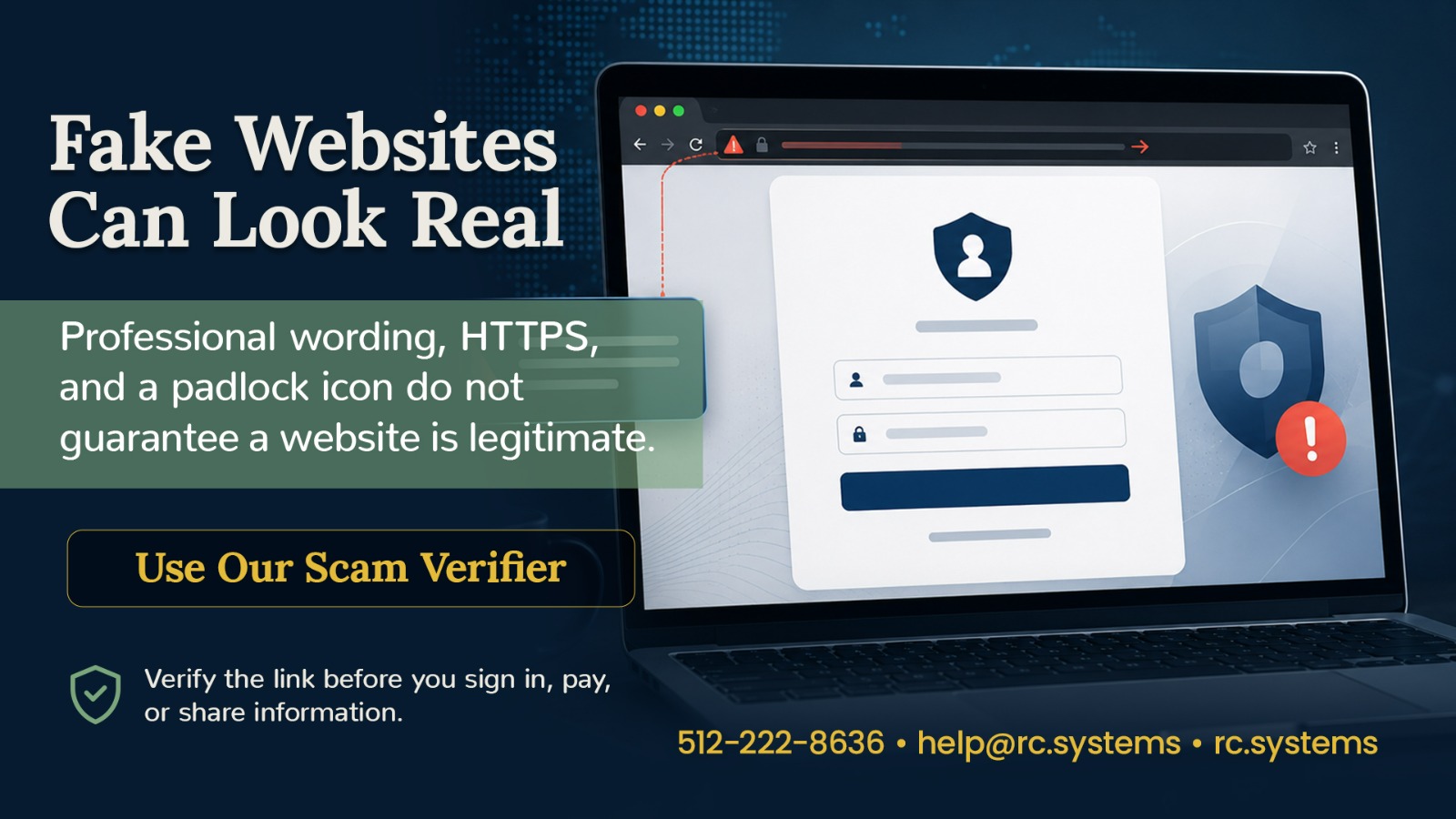
Without realizing it, you're no longer visiting the company's official website.
Instead, you've been redirected to a carefully crafted fake page designed to steal your login credentials, payment information, or other personal details. There are no obvious warning signs, no flashing security alerts, and no indication that anything is wrong. From the user's perspective, the experience feels completely normal.
According to a recent warning from the FBI's Internet Crime Complaint Center (IC3), this type of attack is becoming increasingly common. Cybercriminals are using a technique known as Traffic Distribution Systems (TDSs) to quietly redirect unsuspecting users to malicious websites. Rather than relying on obvious scams or poorly designed phishing pages, these systems help attackers deliver convincing fake websites based on a person's location, device, browsing habits, or the link they clicked.
The warning highlights an important shift in online crime. Modern cybercriminals no longer need to rely solely on hacking computers or breaking into networks. Increasingly, they are manipulating the path people take online, ensuring victims arrive at fraudulent websites before they ever realize something has changed.
For individuals and families, this creates a new challenge. Knowing how to spot suspicious emails or create strong passwords is still important, but those habits alone may not be enough when criminals can make fake websites appear almost identical to the real thing.
Understanding how these attacks work is becoming just as important as knowing how to avoid them.
Most people assume that clicking a trusted link will take them exactly where they expect to go. Whether it's an online retailer, a bank, a streaming service, or a government agency, we naturally believe the destination is genuine unless something immediately appears suspicious.
Cybercriminals are taking advantage of that trust.
In its recent advisory, the FBI explained how attackers are increasingly using Traffic Distribution Systems, or TDSs, to control where internet users are sent after clicking a link. While these systems were originally developed for legitimate online advertising and website traffic management, criminals have adapted the technology for malicious purposes.
Instead of directing visitors to the intended destination, a malicious TDS quietly reroutes them to a fraudulent website that closely resembles the legitimate one. This process often happens in seconds and without any visible warning to the user.
What makes these attacks particularly dangerous is their ability to customize the experience. A fake website may only appear to users in a specific country, on certain devices, or after clicking links from particular emails or advertisements. Security researchers may see one version of the website while potential victims see something entirely different.
This level of customization makes detection significantly more difficult.
For example, a criminal may send thousands of promotional emails advertising discounted airline tickets. Security software reviewing the links might see a harmless travel page, while people who open the email on their smartphones are redirected to a convincing payment page designed to collect credit card information.
The same tactic can be used to imitate banks, government agencies, healthcare providers, cloud storage services, or online retailers. The websites often copy official logos, fonts, colors, and layouts so accurately that many visitors never question their authenticity.
The danger isn't simply visiting the website. The danger is believing you're still interacting with the company you intended to reach.
Not long ago, fake websites were relatively easy to recognize. They often contained spelling mistakes, low-quality graphics, broken links, or unusual web addresses that immediately raised suspicion.
That is no longer the case.
Today's cybercriminals have access to the same website development tools used by legitimate businesses. Professional templates, high-resolution images, responsive mobile designs, and artificial intelligence allow criminals to build convincing websites in a matter of hours.
Many fraudulent websites now include features people commonly associate with security. They may display a padlock icon, use HTTPS encryption, and closely imitate the branding of well-known companies. While HTTPS helps protect information transmitted between a user and a website, it does not verify that the website itself is trustworthy. Criminals can also obtain SSL certificates, making their fake websites appear secure at first glance.
Another tactic involves registering domain names that differ from legitimate websites by only one or two characters. A hurried user checking email on a mobile phone may never notice the difference before entering login credentials or payment details.
Artificial intelligence has made these scams even more convincing. Instead of publishing websites filled with awkward grammar and obvious errors, criminals can now generate polished content that matches the tone and style of legitimate businesses. Customer service chat windows, frequently asked questions, privacy policies, and even fake product reviews can all be created automatically, making fraudulent websites appear more credible than ever before.
For families managing online banking, shopping, healthcare portals, or government accounts, these improvements mean the traditional advice to "look for obvious signs" is becoming less effective. The websites themselves are no longer the easiest place to identify a scam. Instead, the safest approach is to verify how you arrived there in the first place.
A single click from an unexpected email, text message, or online advertisement can quietly place you on a website that was never meant to protect your information.
Fake websites don't appear by accident. Cybercriminals invest significant time and effort into getting people to visit them, often using methods that blend into everyday online activity. Instead of relying on one tactic, they spread malicious links across multiple channels, increasing the chances that someone will click without thinking twice.
Email remains one of the most common delivery methods. A message claiming to be from your bank, a shipping company, or a streaming service may ask you to verify your account or resolve an urgent issue. The email often includes branding that closely resembles the real company, making the link appear trustworthy.
Text messages have become just as effective. A notification about an unpaid toll, a missed package, or unusual account activity creates a sense of urgency that encourages immediate action. Since many people access these messages on mobile devices, they're less likely to inspect the web address before tapping the link.
Social media has also become a popular distribution channel. Sponsored advertisements, giveaway promotions, and fake customer support pages can all direct users to fraudulent websites. In some cases, criminals create fake business profiles that respond to customer complaints with links leading to counterfeit login pages.
Even search engines can be exploited. Attackers sometimes use malicious advertisements or search engine optimization techniques to push fake websites higher in search results. Someone searching for a bank's login page or a government service may unknowingly click a fraudulent result before reaching the legitimate website.
QR codes present another growing risk. Restaurants, parking meters, event tickets, and promotional posters all rely on QR codes for convenience. Criminals have started replacing legitimate QR codes with fake ones that redirect users to malicious websites. Since the destination isn't visible until after the code is scanned, people often trust the link without hesitation.
Browser notifications add another layer of deception. Some malicious websites ask visitors to allow notifications to continue browsing. Once permission is granted, users may begin receiving convincing security alerts or fake software update messages that direct them back to fraudulent websites days or even weeks later.
The common thread in all of these attacks is trust. Criminals understand that people are more likely to click when a message feels familiar or appears to come from a company they recognize. Instead of attacking computers directly, they focus on influencing human behavior.
Many people assume that fake websites exist solely to steal credit card numbers. While financial information remains valuable, today's cybercriminals are often after something much broader.
Login credentials are one of their primary targets. A username and password for an email account can provide access to password reset links for banking, shopping, healthcare, and social media accounts. In many cases, compromising one account creates opportunities to access several others.
Personal information is equally valuable. Names, home addresses, phone numbers, dates of birth, driver's license numbers, and Social Security numbers can all be used to support identity theft or combined with information from previous data breaches.
Some fake websites are designed to collect multi-factor authentication (MFA) codes. A victim may unknowingly enter a one-time verification code while criminals attempt to log in to the real account in the background. Within seconds, attackers gain access despite the additional layer of security.
Others encourage users to download files disguised as invoices, software updates, or security tools. These downloads may install malware capable of monitoring activity, recording keystrokes, or providing attackers with ongoing access to the device.
In more sophisticated attacks, criminals target browser session cookies. Rather than stealing passwords directly, they attempt to capture information that allows them to impersonate an authenticated user, bypassing traditional login procedures altogether.
The objective is rarely limited to a single account. Stolen information is often combined with other data collected from previous attacks, creating detailed profiles that criminals can use themselves or sell to others on underground marketplaces.
The challenge with modern fake websites is that they often look legitimate. Still, there are warning signs that can help reduce your risk if you know what to look for.
Pay attention if you notice:
No single warning sign confirms that a website is fraudulent. However, when several appear together, it's worth slowing down and verifying the source before entering any personal information.
One simple habit can make a significant difference: instead of clicking a link in an email or text message, open your browser and manually type the official website address. It takes only a few extra seconds but dramatically reduces the risk of landing on a fraudulent page.
Cyber threats continue to evolve, but the goal remains the same: protecting the personal information that matters most.
At RC Systems & Support, we help individuals and families understand the risks behind today's online threats and provide practical solutions to reduce them. From cybersecurity guidance and identity protection to credit monitoring services, our focus is on helping people recognize suspicious activity before it leads to financial loss or identity theft.
Technology alone cannot eliminate every cyber threat. Awareness, preparation, and ongoing monitoring play an equally important role. By combining trusted security practices with reliable identity protection, families can feel more confident navigating an increasingly complex digital world.
Staying informed is one of the strongest defenses available, and understanding how criminals operate is the first step toward making smarter decisions online.
One of the reasons fake website scams continue to succeed is that they rarely begin with an obviously suspicious link. Instead, attackers disguise their redirects within situations that feel completely ordinary.
The FBI has warned that malicious Traffic Distribution Systems are being used in campaigns involving online banking, cryptocurrency services, cloud storage platforms, and business email accounts. Rather than sending every visitor to the same fraudulent page, these systems intelligently redirect users based on factors such as their location, browser type, operating system, or referral source. This selective approach makes the attacks harder for both security researchers and automated detection systems to identify.
Imagine searching online for customer support for a software product. Among the search results is a sponsored advertisement that looks legitimate. After clicking the ad, you're redirected to a website that perfectly matches the company's branding. It asks you to sign in before contacting support. Everything appears normal, until your credentials are captured and sent directly to cybercriminals.
In another scenario, someone receives an email claiming that unusual activity has been detected on their banking account. The email encourages immediate action and includes a link to verify recent transactions. The login page that appears looks identical to the bank's official website, complete with security messages and familiar branding. Without realizing it, the victim enters their username, password, and even a one-time verification code, handing attackers everything they need to access the real account.
These attacks aren't successful because people ignore security advice. They're successful because criminals have become remarkably skilled at recreating the online experiences people already trust.
The growing sophistication of these campaigns reinforces an important point: online safety is no longer about spotting poorly designed scam websites. It's about verifying that you're interacting with the genuine destination before sharing any personal information.
Realizing you've visited a fraudulent website can be unsettling, but acting quickly can significantly reduce the potential damage. The sooner you respond, the greater your chances of preventing identity theft or financial fraud.
If you only visited the website without entering any information, close the page immediately and avoid returning to it. While it's still a good idea to run a security scan on your device, simply opening a webpage doesn't automatically mean your information has been compromised.
If you entered a username or password, change those credentials as soon as possible using the official website, not the link you originally clicked. If you use the same password on other accounts, update those as well. Although password reuse remains a common habit, it dramatically increases the impact of a single compromised account.
If you submitted payment information or banking credentials, contact your financial institution immediately. Many banks can temporarily monitor your account, flag suspicious transactions, or issue replacement cards before unauthorized activity occurs.
Anyone who shared sensitive personal information, such as a Social Security number or driver's license number, should consider placing a fraud alert or credit freeze with the major credit bureaus. Monitoring your credit reports over the following months can also help identify suspicious activity before it develops into larger identity theft problems.
Finally, report the incident. Suspicious websites can be reported to the FBI's Internet Crime Complaint Center (IC3), the Federal Trade Commission (FTC), or the legitimate company being impersonated. Every report helps investigators identify emerging scam campaigns and may prevent someone else from becoming a victim.
The most important thing to remember is that making one mistake doesn't define your online security. Cybercriminals design these attacks to deceive ordinary people. Responding quickly and taking the right steps afterward often makes all the difference.
Cybercriminals have changed the way they operate. Instead of forcing their way into computers, they're increasingly guiding people toward fraudulent websites that appear trustworthy from the very first click. As the FBI's recent warning demonstrates, these attacks rely less on technical complexity and more on exploiting everyday habits, checking email, tracking a package, searching online, or responding to what seems like a routine request.
For individuals and families, this means online safety is no longer just about avoiding suspicious-looking websites. It's about slowing down, verifying where links lead, and recognizing that even familiar brands can be impersonated with remarkable accuracy.
At RC Systems & Support, we believe cybersecurity begins with awareness. Through cybersecurity guidance, identity protection, and credit monitoring services, we help individuals and families reduce the risks that come with today's increasingly sophisticated online threats. While no solution can eliminate every cybercrime, understanding how these attacks work makes it far less likely that you'll become their next target.
The next time a website asks you to sign in, verify your identity, or confirm a payment, take a moment before you click. That brief pause could be the difference between visiting a trusted website and walking into a carefully designed trap.




.avif)
.avif)