
When the U.S. Department of State issued a Worldwide Caution advising Americans to remain vigilant while traveling abroad, most people naturally focused on the immediate security risks. The advisory followed heightened tensions in the Middle East and warned that U.S. citizens and interests could face increased threats in certain regions.
Around the same time, several major news organizations reported that Iranian linked operators had allegedly combined weaknesses in legacy telecommunications systems with commercially available location data to help identify the movements of United States military personnel and contractors. Although many operational details remain classified, the reports introduced a topic that extends well beyond international politics.
The story is not simply about one country or one intelligence operation. It is about understanding how modern smartphones generate information that can become valuable to governments, intelligence agencies, cybercriminals, and other sophisticated threat actors.
For years, cybersecurity experts have warned that smartphones are among the richest sources of personal data ever created. Every day they produce information that allows mobile networks to function efficiently while supporting the convenience people have come to expect. The same information, however, can also reveal patterns that many users never realize they are sharing.
Understanding how this happens is the first step toward understanding why digital privacy has become one of today's most important cybersecurity challenges.
Most people think of a smartphone as something they actively use. They open an application, send a message, check directions, or browse the internet. What often goes unnoticed is everything the phone does when it appears to be doing nothing at all.
Even while resting in your pocket, a smartphone continues communicating with nearby cellular towers so it can receive calls, deliver text messages, and maintain a reliable connection. Navigation services update location information, wireless networks search for available connections, and applications quietly synchronize data in the background.
These routine communications are essential because they allow the mobile network to answer important questions.
Without these automatic exchanges, modern mobile communication simply would not work. The ability to stay connected while moving between cities, states, or countries depends on millions of these background interactions occurring every second.
The convenience is remarkable, but it also creates an enormous amount of digital information that can reveal much more than most users realize.
One of the technologies frequently mentioned in recent reporting is Signaling System Number Seven, commonly known as SS7. Although the name sounds highly technical, its role is relatively simple. It allows telecommunications providers around the world to exchange the information needed to route phone calls, text messages, and mobile services between networks.
SS7 was developed decades before smartphones became part of everyday life. At the time, mobile networks were much smaller, and the telecommunications industry operated under a very different set of assumptions. Network operators generally trusted one another, and cybersecurity threats were far less sophisticated than they are today.
As mobile technology evolved, researchers discovered that some older signaling systems could present security challenges under specific circumstances. These are not weaknesses that ordinary criminals can exploit with a simple application or website. They typically require specialized access and technical capabilities associated with highly sophisticated organizations.
Recent reports suggest that these legacy technologies may have played a role in helping Iranian linked operators identify the movements of certain United States personnel. Whether through telecommunications infrastructure, commercial location data, or a combination of both, the broader lesson remains the same.
Modern surveillance often depends less on breaking into a smartphone and more on understanding the information that smartphone continuously generates.
For many years, cybersecurity discussions centered on passwords, malware, and hacked accounts. While those threats remain significant, security experts now recognize that location data can be just as valuable as the information stored on a device.
Think about what your smartphone knows over the course of a single week. It can identify where you live, where you work, the route you take every morning, the stores you visit, and the places where you spend your evenings or weekends. Individually, these details may seem insignificant. Together, they create a remarkably accurate picture of your daily routine.
This type of information is commonly referred to as metadata. Unlike the content of a phone call or text message, metadata describes how, when, and where communication takes place. It may include the approximate location of a device, the time it connects to a network, the duration of a call, or the cellular tower handling the connection.
To many people, metadata sounds harmless because it does not reveal the words spoken during a conversation. In reality, it can often provide a clearer understanding of someone's behavior than the conversation itself.
Imagine a smartphone that appears at the same office building every weekday morning, leaves at five o'clock, and regularly visits the same coffee shop before returning home. Another phone follows a nearly identical schedule and frequently appears at the same locations. Without reading a single message, an analyst could reasonably conclude that the two people have an ongoing relationship.
This process is known as pattern of life analysis, and it has become one of the most valuable techniques in modern intelligence gathering. Rather than focusing on isolated events, analysts examine repeated behaviors to understand routines, identify relationships, and recognize changes that may indicate unusual activity.
The important point is not that someone is constantly watching your phone. It is that smartphones naturally generate information capable of revealing far more than most people realize.
Location information does not exist only inside mobile networks. A large part of today's digital economy is built around understanding how people move, shop, travel, and interact with the world around them.
Many mobile applications request permission to access your location. Some need this information to function properly, such as navigation, weather, or ride sharing apps. Others collect location data to improve advertising, analyze customer behavior, or measure how people interact with businesses and services.
Alongside location services, smartphones also use advertising identifiers. These unique identifiers help advertisers measure the effectiveness of marketing campaigns without relying directly on personal information such as your name or phone number.
Although advertising identifiers are designed to protect user privacy, researchers have shown that combining multiple sources of location data can sometimes make it possible to identify individuals through their daily routines. A device that spends every night at one address and every weekday at another location may reveal where its owner lives and works, even if their name never appears in the dataset.
This is one reason why governments and privacy advocates have increased their focus on commercial data collection in recent years. The concern is not necessarily that companies are collecting information illegally. Rather, it is that large amounts of seemingly ordinary data can become highly sensitive when combined with other information.
For everyday smartphone users, this serves as an important reminder that privacy is shaped not only by the security of a device, but also by the permissions granted to the applications installed on it.
The recent reports involving alleged Iranian surveillance attracted worldwide attention because they connected several technologies that usually receive little public discussion. Legacy telecommunications systems, commercial location data, and mobile devices became part of the same story, demonstrating how information collected for legitimate purposes can also support intelligence operations.
It is important, however, to keep the broader context in mind.
The technologies discussed throughout this article are not unique to one country, one conflict, or one intelligence agency. Mobile networks operate globally, and smartphones generate similar types of information regardless of where they are used. The recent reports simply illustrate how that information may be combined by sophisticated organizations to achieve specific objectives.
This is why cybersecurity professionals continue encouraging individuals to understand how their devices work rather than relying solely on security software to protect them. Technology can reduce risk, but awareness remains one of the strongest forms of defense.
For most people, the takeaway is not fear. It is understanding.
Recognizing how smartphones communicate, what information they generate, and how that information may be used allows individuals to make better decisions about privacy without giving up the convenience that modern technology provides.
The recent reports surrounding mobile surveillance should not discourage people from using smartphones. These devices have transformed the way we communicate, work, travel, and access essential services. The goal is not to disconnect from technology but to use it with a better understanding of how it works and the information it generates.
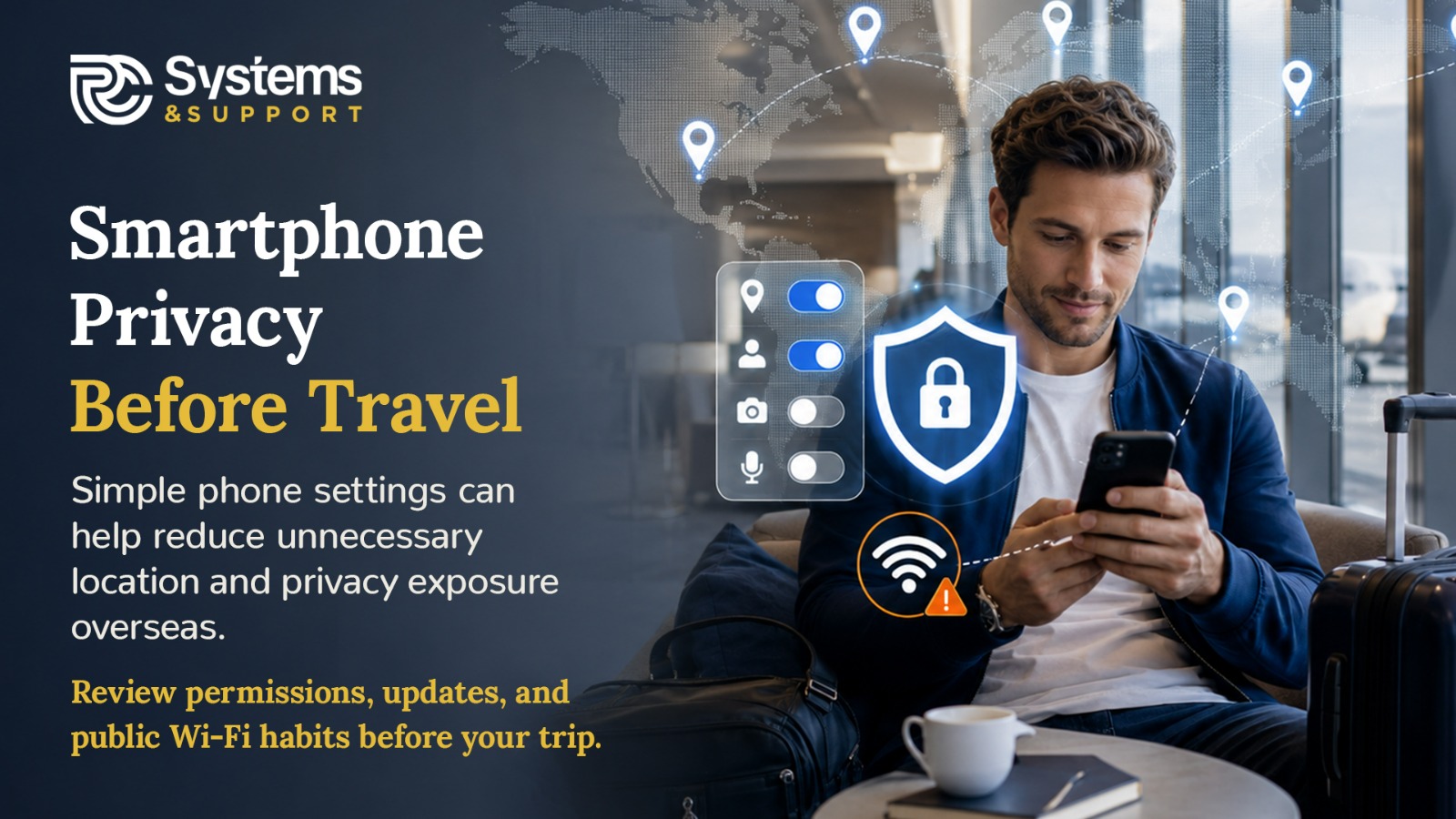
While sophisticated surveillance operations require capabilities far beyond those of ordinary cybercriminals, there are practical steps every smartphone user can take to strengthen their privacy and reduce unnecessary exposure.
Consider adopting these habits:
None of these practices eliminate every risk, but together they create multiple layers of protection. More importantly, they encourage users to become active participants in protecting their own digital privacy rather than relying entirely on technology to do it for them.
Smartphones will continue evolving, and so will the technologies that support them. Artificial intelligence, connected devices, and faster mobile networks promise even greater convenience in the years ahead. They will also generate more information than ever before, making privacy and security increasingly important considerations for individuals and families.
At the same time, governments, technology companies, and mobile carriers are investing heavily in stronger security standards and improved privacy controls. Older infrastructure is gradually being replaced, new regulations are giving consumers greater control over their personal information, and mobile operating systems now provide more transparency about how applications collect and use data.
These improvements are encouraging, but technology alone cannot solve every challenge.
Cybersecurity has always depended on a combination of secure systems and informed users. The better people understand the devices they carry every day, the more confident they become in making decisions that protect their information without sacrificing convenience.
The recent reports involving alleged Iranian surveillance did not introduce a new cybersecurity problem. Instead, they reminded the world of something security professionals have understood for years: smartphones continuously generate valuable information that extends far beyond calls, messages, and photos.
For most people, this should not be a reason for fear. It should be a reason for awareness. Understanding how mobile networks operate, how location data is collected, and why digital footprints matter allows individuals to make smarter decisions about privacy in an increasingly connected world.
Cybersecurity is no longer just about protecting computers from viruses or creating stronger passwords. It is about understanding the technologies we rely on every day and recognizing how they shape our digital lives.
At RC Systems & Support, we believe knowledge is one of the most effective cybersecurity tools available. Technology will continue to evolve, and so will the threats that target it. By helping individuals and families understand the risks, adopt practical security habits, and stay informed about emerging cyber threats, we aim to make digital life safer without making it more complicated.
Because in today's connected world, protecting your privacy begins with understanding how your technology works.




.avif)
.avif)